
How do life sciences manufacturers systematically cut energy and resource consumption without jeopardizing cleanroom qualification and GMP status?
We analyze energy and resource consumption in regulated production and establish an energy management system to ISO 50001: energy audit, process optimization and ongoing monitoring. Tackling HVAC optimization on cleanrooms without aligned change management risks a requalification that exceeds every saving.
Overview
Why is systematic energy management so critical in life sciences production?
Energy audit and EnMS implementation in qualified production environments · ISO 50001, ISO 14001, CSRD (EU) 2022/2464
Last updated: June 13, 2026
Pharma, biotech, medtech and IVD manufacturers operate energy-intensive, qualified facilities whose largest consumers are often not captured systematically.
- HVAC systems for cleanrooms and controlled storage areas rank among the largest consumers. Optimizing air change rates or control concepts touches qualified parameters and is not permissible without change control.
- Rising energy costs hit production margins directly, while compressed air, refrigeration systems and sterilization frequently run as secondary loads without dedicated metering.
- ESG and sustainability reports under CSRD (EU) 2022/2464 and the ESRS require measurable, auditable capture of energy consumption and greenhouse gas emissions, not estimated figures.
- A certified energy management system to ISO 50001 is increasingly expected by customers, investors and under the EU Energy Efficiency Directive (EU) 2023/1791, and it demands continuous monitoring rather than a one-off measurement.
Services
How we support you
Energy audit & consumption analysis
Capture of energy consumption to ISO 50002 across HVAC, cleanrooms, compressed air, refrigeration, lighting and production equipment. The result is a prioritized action plan covering the largest consumers and assessed savings potential.
Energy management system to ISO 50001
Implementation of an EnMS to ISO 50001: energy policy, energy review, energy objectives, monitoring and management review. The result is a certification-ready system with documented energy performance indicators and a baseline.
ESG & CSRD data foundation
Preparation of energy and emissions data as an auditable basis for sustainability reporting under CSRD (EU) 2022/2464 and the ESRS, aligned with EnMS monitoring so that the report and the energy data stay consistent.
How we work together
What it comes down to
In regulated production, every energy project turns on which equipment may be touched at all. The energy audit to ISO 50002 must first reliably measure the largest consumers: HVAC, refrigeration and compressed air usually weigh more heavily than the production equipment itself.
Only on this baseline can you separate which measures on non-qualified secondary consumers such as lighting can be implemented immediately, and which on qualified systems such as cleanroom HVAC must run through change control.
Skip that distinction and the most expensive item simply arrives later: an unplanned requalification whose effort exceeds the savings.
The energy management system to ISO 50001 takes over from here. It turns individual measurements into ongoing monitoring that maintains the energy review and substantiates the measures against the baseline. The same data source also underpins sustainability reporting under CSRD (EU) 2022/2464 and the ESRS, so that the energy report and the EnMS data stay consistent.
Clean data capture and aligned approval up front cost less than correction loops during the certification or assurance audit.
Our approach
Our approach
Step
Result
Energy audit
Captured energy consumption to ISO 50002 with identified significant energy users and a documented consumption baseline.
Potential assessment & prioritization
Prioritized action plan: assessed savings potential, separated into qualified and non-qualified equipment.
Implementation of measures with change control
Implemented efficiency measures, with changes to qualified systems approved and documented through change control.
EnMS implementation
Energy management system to ISO 50001 with energy policy, objectives, energy performance indicators and monitoring in operation.
Certification preparation
Certification-ready EnMS, internally audited, with findings resolved.
Monitoring & reporting
Ongoing energy monitoring; energy and emissions data as an auditable basis for CSRD and ESG reports.
Common pitfalls
Where projects commonly fail
HVAC optimization on cleanrooms is tackled without change control.
Air change rates, pressure cascades and temperatures are qualified parameters; adjusting them without a risk assessment and quality assurance approval can trigger a requalification whose effort exceeds the energy savings.
The energy audit captures only the obvious consumers.
Compressed air, refrigeration systems and sterilizers often run without dedicated metering; if they are estimated rather than measured, the baseline for ISO 50001 remains unreliable and the largest savings go undetected.
The EnMS is built as a document collection rather than a system.
ISO 50001 requires continuous monitoring, an energy review and a management review; a one-off measurement without ongoing data capture is exposed in the certification audit.
Energy data for the CSRD report and for EnMS monitoring come from separate sources.
If the values for energy consumption or emissions diverge, a consistency problem arises that becomes visible during the assurance process of sustainability reporting under the ESRS.
A technology business case accounts only for the investment cost.
Heat recovery or new drives in qualified areas entail qualification and validation effort; if this is left out, the ROI collapses after project start.
Supply Chain & Technical Operations
Do any of these pitfalls apply to you?
In a first call we assess your situation and say what needs clarifying first in your case. Without obligation, reply usually within one working day.
FAQ
Frequently asked questions
Sources
- ISO 50001, Energy management systems: requirements with guidance for use
- ISO 50002, Energy audits: requirements with guidance for use
- ISO 14001, Environmental management systems: requirements with guidance for use
- Directive (EU) 2022/2464 (CSRD) and Delegated Regulation (EU) 2023/2772 (ESRS), primary text
- Directive (EU) 2023/1791 (Energy Efficiency Directive), primary text
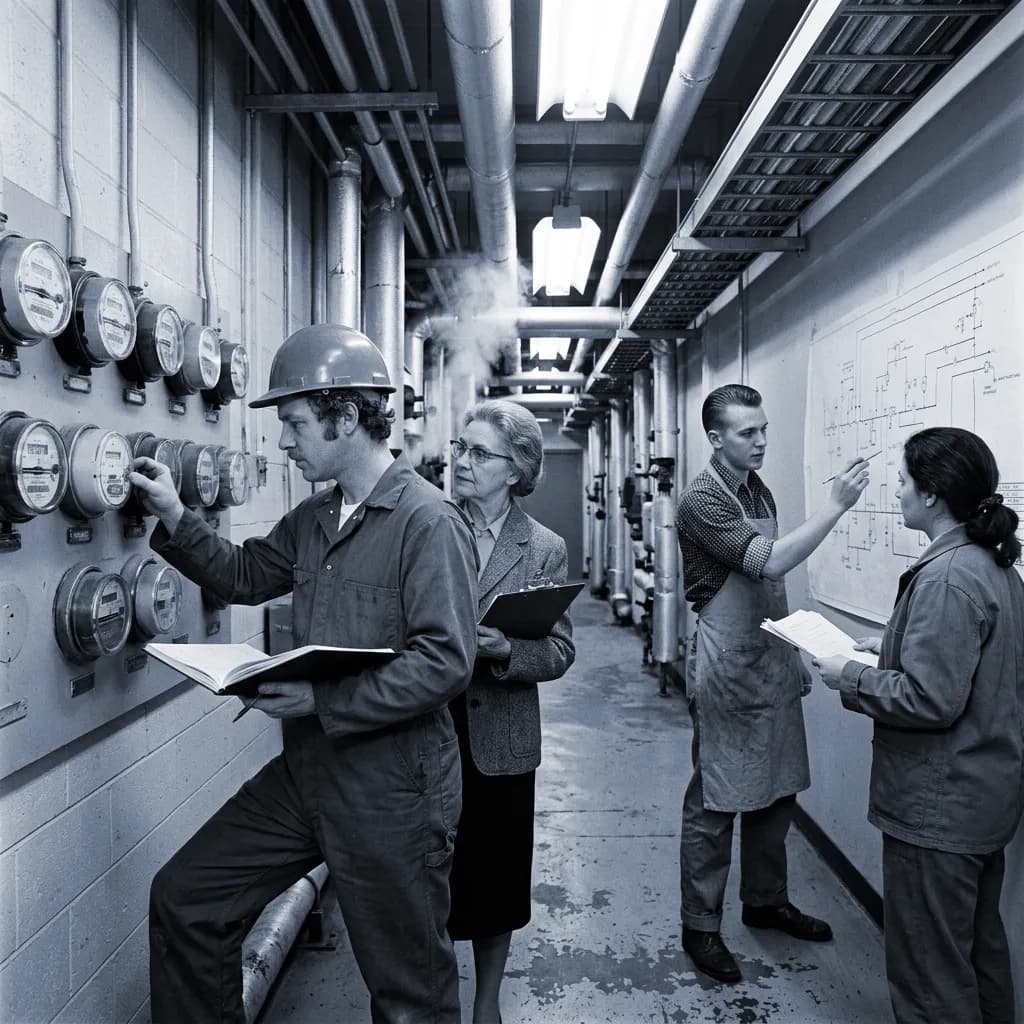
Image notice: The images on this page were generated using artificial intelligence. They do not depict real people, places, or events.
Life Science Journal
Regulatory updates, straight to your inbox.
New requirements, authority decisions and practice notes. Once a month, unsubscribe any time.
Projects from this industry
What we have worked on in this industry


Latest insights
All insights →Regulations & standards considered
- ISO 50001 (energy management systems)
- ISO 14001 (environmental management systems)
- ISO 50002 (energy audits)
- CSRD: Corporate Sustainability Reporting Directive (EU) 2022/2464
- ESRS: European Sustainability Reporting Standards (Delegated Regulation (EU) 2023/2772)
- EU Energy Efficiency Directive (EU) 2023/1791
Related topics
Sustainable Manufacturing →
Sustainability strategy for the entire production beyond energy alone
Lean Manufacturing →
Process efficiency and waste reduction as a resource lever
CAPEX Planning & Qualification →
Investment appraisal for energy technologies with qualification effort
Change Management →
Change control for interventions on qualified HVAC and equipment systems
Have a concrete project?
Briefly outline your situation. We'll respond with an initial assessment, usually within one business day.
Prefer direct? +39 02 8904 1000
info@theentourage.it
- Reply usually within one working day
- 4 locations: DE · CH · IT · US
- 100% life sciences