
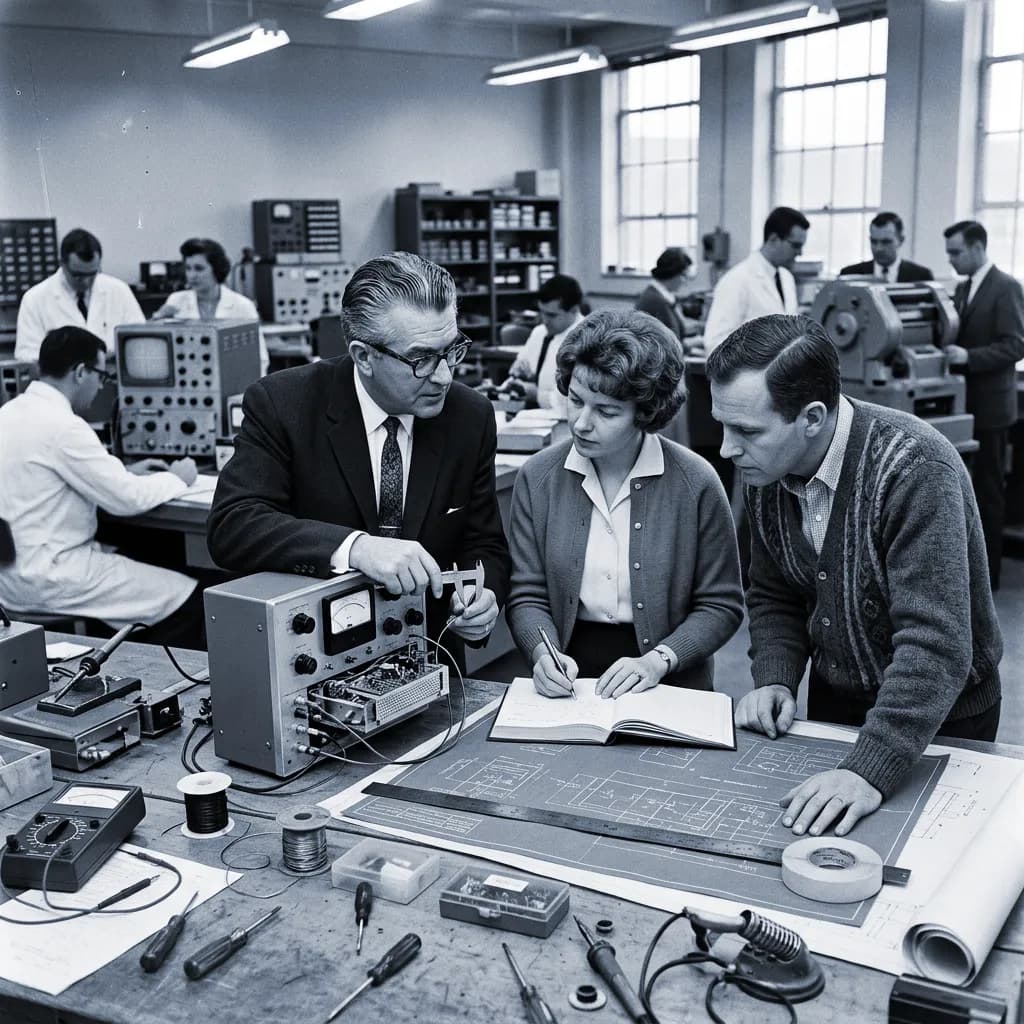
How do MedTech manufacturers accelerate product development through structured prototyping without breaching documentation obligations within the design controls process?
We plan Prototyping as a formal element of development under ISO 13485:2016 and integrate it into the design controls under 21 CFR Part 820. Defining the evaluation goal and acceptance criterion before the build and carrying the result into the Design History File avoids expensive changes after design freeze.
Overview
What prototyping challenges arise in MedTech development?
Prototyping as a formal element of the design controls · ISO 13485:2016 Section 7.3, 21 CFR Part 820 (QMSR), ISO 14971
Last updated: August 2, 2026
In many development teams, prototyping is an informal activity: prototypes are built, but the results do not feed in a structured way into the development process under ISO 13485:2016 and the design controls under 21 CFR Part 820 (QMSR).
- Prototypes are built without a defined evaluation objective and without an acceptance criterion, so the result cannot be used as design evidence. Design and development under ISO 13485:2016 Section 7.3 requires verifiable inputs and outputs.
- Prototyping results are not formally documented and do not feed into the Design History File under ISO 13485:2016 Section 7.3, so design decisions are later not traceably substantiated.
- Too few iterations before design freeze lead to late design changes that are significantly more expensive and time-consuming once verification has been completed.
- Prototypes for formative usability tests under IEC 62366-1 do not represent the final interaction design adequately, so the test results do not reliably predict actual usability.
- Prototyping is not linked to the risk analysis under ISO 14971, so identified risks are not fed back into the next iteration.
Services
How we support you
Prototyping strategy & phase planning
We define the prototype phases along the development process under ISO 13485:2016 Section 7.3: which prototype type (conceptual, functional, usability prototype) is built when and with which evaluation objective. Deliverable: a documented prototyping plan mapping the phases to the design reviews.
Evaluation planning & acceptance criteria
We plan every prototype evaluation with predefined acceptance criteria, so the result is a yes/no decision against a defined objective. Deliverable: an evaluation plan per prototype version with measurable criteria and an analysis scheme.
Documentation in the Design History File
We transfer prototype versions, test results and design decisions as evaluation reports and review records into the Design History File under ISO 13485:2016 Section 7.3. Deliverable: uniquely identified prototype versions with justified design decisions, ready to file in the DHF.
Rapid prototyping & technology selection
We assess prototype technologies (3D printing, CNC, in-house manufacturing) for their suitability for the respective development phase and evaluation purpose. Deliverable: a technology recommendation per phase with a rationale for suitability and the limits of its conclusiveness.
Qualification of study prototypes
For prototypes used in usability studies with participants or in clinical testing, we define the required safety requirements and the qualification evidence. Deliverable: requirements and qualification documentation for participant-ready prototypes.
How we work together
What it comes down to
Structured prototyping differs from informal tinkering in a single commitment: the evaluation objective comes before the prototype. A prototype without a predefined acceptance criterion answers no design question; it merely produces an object. By contrast, defining for each phase which prototype type is to resolve which open question against which criterion turns every iteration into usable evidence.
The results belong directly in the Design History File and support the design and development evidence under ISO 13485:2016 Section 7.3, not as a retrospective collection, but as ongoing documentation that captures design decisions at the moment they are justified.
For the US market, 21 CFR Part 820 (QMSR) has required the same evidence since February 2, 2026, because the regulation incorporates that same standard by reference.
The real hurdle lies not in the manufacturing technology, but in the timing of design freeze. Every design question left open before the freeze becomes a change afterwards that triggers renewed verification and, where applicable, a renewed risk assessment under ISO 14971.
That is why we put the weight on the iterations: more of them and more targeted that feed risks and usability findings under IEC 62366-1 back into the risk analysis and the design before verification begins.
In this way, design freeze becomes the confirmation of a mature design rather than the start of an expensive correction loop.
Our approach
Our approach
Step
Result
Define the prototyping strategy
A documented prototyping plan: prototype types, phases and evaluation objectives along the development process under ISO 13485:2016.
Plan the evaluation per phase
Evaluation plans with acceptance criteria per prototype version, aligned with the upcoming design reviews.
Build & evaluate prototypes
Prototype versions assessed against the acceptance criteria, with risk findings fed back into the risk analysis under ISO 14971.
Document the results
Evaluation reports and review records, filed in the Design History File under ISO 13485:2016 Section 7.3.
Iterate up to design freeze
A mature, evaluated product design with traceable rationale for the design decisions before the final verification begins.
Common pitfalls
Where projects commonly fail
Prototypes are built without a predefined evaluation objective.
The result then cannot be used as design evidence, because no acceptance criteria exist. Design and development under ISO 13485:2016 Section 7.3 requires verifiable outputs against defined inputs.
Prototyping results remain in lab notebooks and emails and never reach the Design History File under ISO 13485:2016 Section 7.3.
In an audit, the traceability of why one design option was chosen and another discarded is then missing.
Iteration happens too late and too rarely.
Pulling the design freeze forward under time pressure shifts the corrections into the post-verification phase, where every design change triggers renewed verification and, in some cases, a renewed risk assessment under ISO 14971.
Usability prototypes do not represent the final interaction design adequately.
Formative tests under IEC 62366-1 then yield findings that do not transfer to the series product, and usability only becomes visible as a problem in the summative phase.
Prototyping runs separately from the risk analysis.
Risks that a prototype reveals are not fed back into the risk management file under ISO 14971, so the same weakness persists unnoticed in the next iteration.
Product Development & Regulatory Strategy
Do any of these pitfalls apply to you?
In a first call we assess your situation and say what needs clarifying first in your case. Without obligation, reply usually within one working day.
FAQ
Frequently asked questions
Sources
- ISO 13485:2016, Medical devices, Quality management systems, Section 7.3 (Design and Development)
- 21 CFR Part 820, FDA Quality Management System Regulation (QMSR), in effect since February 2, 2026, incorporating ISO 13485:2016 by reference under § 820.7
- ISO 14971, Application of risk management to medical devices
- IEC 62366-1, Application of usability engineering to medical devices
- Regulation (EU) 2017/745 (MDR) and Regulation (EU) 2017/746 (IVDR), primary text
Image notice: The images on this page were generated using artificial intelligence. They do not depict real people, places, or events.
Life Science Journal
Regulatory updates, straight to your inbox.
New requirements, authority decisions and practice notes. Once a month, unsubscribe any time.
Projects from this industry
What we have worked on in this industry


Latest insights
All insights →Regulations & standards considered
- ISO 13485:2016 (QM system for medical devices, Section 7.3 Design and Development)
- 21 CFR Part 820 (QMSR, incorporating ISO 13485:2016 Section 7.3; formerly § 820.30 Design Controls)
- ISO 14971 (Risk management for medical devices)
- IEC 62366-1 (Usability engineering for medical devices)
- EU 2017/745 (MDR)
- EU 2017/746 (IVDR)
Related topics
Design Controls →
Prototyping as a formal element of the design controls process under 21 CFR Part 820 (QMSR)
Usability Engineering →
Representative prototypes for formative tests under IEC 62366-1
Verification & Validation →
Verification and validation of the final design after design freeze
Feasibility Studies →
Proof of feasibility before the first prototype
Have a concrete project?
Briefly outline your situation. We'll respond with an initial assessment, usually within one business day.
Prefer direct? +39 02 8904 1000
info@theentourage.it
- Reply usually within one working day
- 4 locations: DE · CH · IT · US
- 100% life sciences